
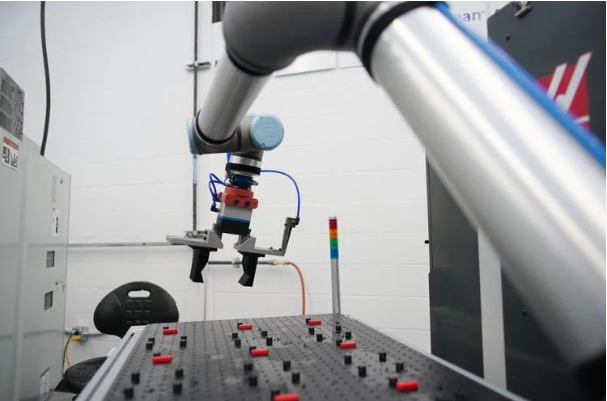
HOW AUTOMATION IS TRANSFORMING MANUFACTURING
06.07.24
Story originally published June 2024 via The Buffalo News
Manufacturers have their share of concerns when it comes to embracing automation and warding off cyberattacks.
But it’s not something they should shy away from. That was the message from panelists at a recent Buffalo Niagara Partnership panel on the topic.
• Manufacturers shouldn’t assume they are immune to a cyberattack that could expose customer information or company research, said Elizabeth Callahan, director of external relations and special programs for EWI, which operates Buffalo Manufacturing Works.
“It’s a lot of layers of protection and thinking about all those things, but we need to be one or two steps ahead,” Callahan said.
Federal agencies like the Department of Defense and the Department of Energy often have cyber-related requirements to be part of their supply chains, she said. If manufacturers don’t meet those standards, they risk missing out on business opportunities.
• Manufacturers should consider taking small steps into automation, instead of a big, expensive plunge at the outset, said Scott Pallotta, CEO of Zehnder Rittling, a heating and cooling products company in Buffalo.
“It doesn’t need to be, ‘Hey, we’re going to automate this production line,’ or, ‘We’re going to replace 10 people with robots,’ ” Pallotta said. “It’s not that. It can be very, very small. It’s putting in a scanner here. It doesn’t seem like a lot, but all of a sudden it’s like, ‘We have all this information, what do we do with it?'”
• When manufacturers introduce automation to the workplace, explain to employees what it will mean for them, said Dave Kegler, director of manufacturing at Sealing Devices in Lancaster.
“They hear the word ‘automation,’ they hear the word ‘change,’ they immediately go to defensive mode: Am I going to lose my job, am I going to be put somewhere else, is my job going to get harder?” Kegler said. “We put a lot of focus on having them know, this is about, how do we make your job easier?”
• The semiconductor industry will need people with four-year degrees, such as engineers, but there will be plenty of other jobs that don’t require that level of formal education, said Stephen Tucker, president and CEO of the Northland Workforce Training Center.
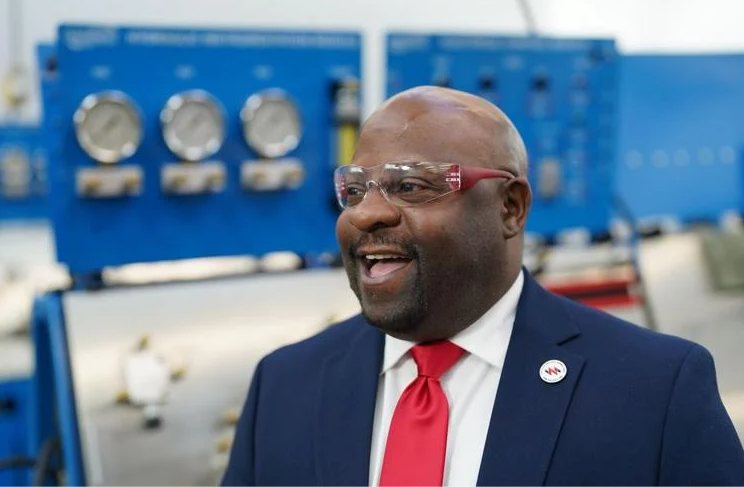
“You’re going to need the folks to manufacture the actual components,” he said.
Buffalo, Rochester and Syracuse are trying to create a “semiconductor corridor,” with manufacturers and other employers serving that high-tech industry. The strategy is central to their bid for $54 million in federal funding in the tech hub competition.
The region needs to raise awareness of the job opportunities that are coming, Tucker said. “As a region, we have to do a better job of telling our story as it relates to manufacturing. We have great companies and products.”
• Technology will be essential for manufacturers, because there aren’t enough new workers coming along to replace all the employees who are retiring, said Alan Rae, director of the University at Buffalo’s Center of Excellence in Materials Informatics.
“We’re going to have to use all the tools we can get – whether it be cobots or AI – to leverage the people we can get in manufacturing,” Rae said.