
NWTC ROLLS OUT 5-YEAR PLAN TO DIVERSIFY REVENUE, ADD TRAINING
04.16.24
Story originally published April 2024 via Buffalo Business First
Written by Katie Anderson
The Northland Workforce Training Center has launched a five-year strategic plan that includes goals such as diversifying revenue streams and adding training programs that have industry demand.
The nonprofit organization began in 2018 as part of the Buffalo Billion.
“The first five years were not fully funded through the Buffalo Billion,” Tucker said. “The state gave us $5 million in runway funding for operations, but the rest came from philanthropic funding that we secured.” CEO Stephen Tucker said the organization and its board of directors started developing the first strategic plan in 2022, after hiring Catapult Executive Consulting.
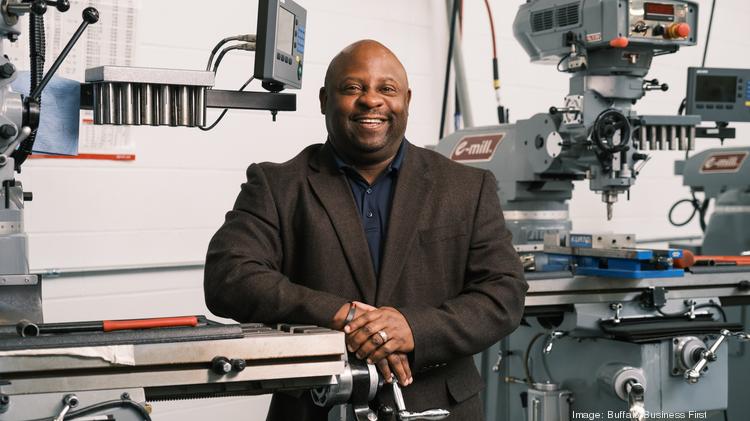
The plan, which Northland unveiled Tuesday, has six pillars, one of which is financial sustainability. Currently, Tucker said, Northland operates on a $5 million annual budget and enrolls about 325 students. About 50% of that is public funding, he said, while 25% is earned revenue and another 25% is philanthropic donations.
By 2028, the plan is to increase enrollment to more than 500 students, have a budget of between $8 million and $10 million, and diversify revenue to 35% public funding, 30% earned revenue and 35% philanthropic.
“We’ll always have to rely on some public funding,” Tucker said.
The earned revenue comes from tuition sharing with SUNY Erie, lease agreements with SUNY Alfred State, fundraising events, community room reservations and Northland Manufacturing, which does contract manufacturing.
Northland has other goals for the next five years that are more student-centered, like bumping the 62% graduation rate to 70% and the retention rate of 73% to 80%.
The center also wants to grow specific demographics of its students. Currently, 55% of students are minorities, but Tucker said he wants to see that grow to 65%. Also, 8% are women and only 4% are refugees, but Northland will try to grow those percentages to 15% and 10% respectively.
Northland set goals for community impact, too, with a goal to increase its overall economic impact in Western New York from a cumulative $84 million to $500 million, which is calculated by the salaries students achieve upon graduation and the anticipated spending they’ll do in the local economy. The goal is to also increase the percentage of student from the Northland Beltline neighborhood from 38% to 50%, according to the plan.
Another pillar of the plan, operational excellence, is something Northland has already been working on. For example, Tucker said the organization hired a human resources person and an information technology person. Northland has a staff of 35, who are mostly in operations, student support and career coaching. The instructors for programs are mostly employees of the partnering schools, SUNY Erie and Alfred State.
“It took a lot to put this plan together, because we still have our everyday jobs to do,” Tucker said. “The consultants were very persistent when it came to looking at all our systems and processes to come up with not just a plan but also all the tactics we need to then implement the plan. I’m very proud that we were able to get it done.”
New programs coming to Northland Workforce Training Center
As part of the plan, Northland developed an industry assessment toolkit to determine what new programs would fit the mission to grow advanced manufacturing, meet an industry need and make a positive community impact.
Tucker said in the last five years, leaders from a variety of industries have requested Northland offer a training program, but not all of them fit the strategic plan of building advanced manufacturing in Buffalo. For example, some folks in cannabis wanted Northland to offer a training program on indoor-grow operations, but when Northland sought community input on that, the surrounding community wasn’t on board.
However, there were four new programs that did meet the criteria that will be starting either this summer or in January:
Auto technician: A one-year certificate program through SUNY Erie. Tucker said Northland has a 6,000-square-foot space, recently vacated by the startup SparkCharge, where the auto program will be. He said some renovations will be needed, but he hopes to begin the program in January. The program received a vehicle and $1.2 million in funding from the New York Power Authority, Tucker said. SUNY Erie will start with two cohorts of 16 students, one in the morning and one in the evening, but the goal is to grow it to 48 students.
Clean energy technician: A one-year certificate program through SUNY Alfred State. This program will involve a simulated smart house with technology like a power wall, electric heat pump, solar roof panels, electric vehicle and charging station. The program will start with 32 students and grow to 48.
HVAC technician: A one-year certificate program through SUNY Erie. The program will start with 32 students and grow to 48. Both the HVAC and the clean tech programs will be funded partly through a $2.3 million grant from the state’s Office of Strategic Workforce Development. Tucker said Northland also applied for a $1.5 million match from the Ralph C. Wilson Foundation.
CNC machining: A 12-week certificate program through Northland. Tucker said that the center’s current CNC program is a two-year associate’s degree, but both students and industry leaders are looking for a shorter-term training program. That’s why he’s hoping to start this program “as soon as possible.”